Why Do Cats Purr? What Purring Means (and How They Do It)


In this guide
The short answer: cats purr most often when they’re relaxed and content, like when you stroke them, they’re curled up on your lap, or they’re kneading a blanket. But purring isn’t only a happy sound. Cats also purr when they’re stressed, frightened, unwell or in pain, probably to soothe themselves. Some cats use a special “solicitation purr” with a hidden cry in it to ask for food. Context tells you which is which.
Why do cats purr?
Contentment
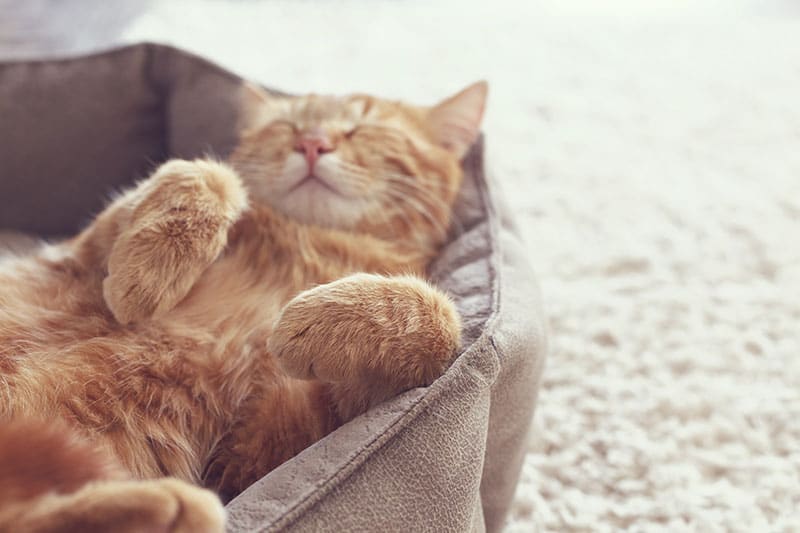
The classic purr: your cat is relaxed, warm and comfortable, often with half-closed eyes, a soft body and slow blinks. Being stroked, especially around the cheeks and chin, is a common trigger.
Bonding and communication
Kittens start purring within days of birth, and mother cats purr while nursing. Purring is thought to help mother and kittens stay connected, since newborn kittens can’t see or hear well yet but can feel the vibration. Adult cats keep using it with the people and cats they trust.
Asking for something
Many owners notice their cat’s purr sounds more urgent at breakfast time. Researchers at the University of Sussex studied this in a 2009 study in Current Biology. They found that some cats use a solicitation purr with a high-pitched, cry-like sound embedded in it. People rated these purrs as more urgent and less pleasant than normal purrs, much like a baby’s cry, which makes them hard to ignore.
Self-soothing when stressed or unwell
Cats also purr at the vet, when they’re frightened, when giving birth, when injured or ill, and sometimes when dying. In these situations purring seems to be a way of calming themselves. A purring cat isn’t always a happy cat, so look at the whole picture: body posture, appetite and behaviour.
Healing? (a popular theory)
Cat purrs fall in a low frequency range, and some researchers have suggested these vibrations might help bones and tissues heal. It’s an appealing idea, and it’s often repeated online, but it hasn’t been proven. A purring cat that’s unwell still needs a vet. What many owners do find is that a purring cat on their lap helps them relax. See the benefits of owning a cat.
How do cats purr?
For a long time, scientists believed every purr needed a rapid, repeated signal from the brain to twitch the muscles of the voice box (larynx). Cats purr both breathing in and out, which is why the sound seems continuous.
A 2023 study in Current Biology from the University of Vienna challenged that. The researchers found that a cat’s larynx can produce low, purr-like sounds without repeated nerve signals, thanks to special pads of tissue in the vocal folds. The authors say this shows our understanding of purring is still incomplete. Even after all these years, exactly how cats purr is still being worked out.
Why does my cat purr when I pet it?
Stroking feels good, and it’s similar to the grooming cats give each other. The purr is your cat’s way of saying it’s relaxed and enjoying the contact. Watch for the point where purring stops, the tail starts twitching or the skin ripples. That usually means your cat has had enough.
Why does my cat purr so loudly (or so much)?
Some cats are simply loud purrers. Like voices, purrs vary from cat to cat. A cat that purrs constantly is usually just very relaxed and sociable. If your cat has suddenly started purring much more and also seems off-colour, hides, eats less or seems sore, a vet check is wise, since cats may purr when they’re unwell.
Why doesn’t my cat purr?
Some cats purr so quietly that you can only feel it if you put your hand on their throat or chest. Others rarely purr at all, even when happy, and show contentment through slow blinks, kneading, head bumps or simply staying close. A cat that used to purr and has stopped, together with other changes in behaviour, is worth mentioning to your vet.
Why does my cat knead and purr?
Kneading (pushing the paws in and out, sometimes called “making biscuits”) goes back to kittenhood, when kittens knead their mother to help the milk flow. Many adult cats knead and purr on soft blankets or on your lap when they feel content and safe. Some lick you at the same time, which is usually a sign of affection. See why does my cat lick me?
Why does my cat purr and then bite me?
Your cat may be enjoying being stroked, then suddenly reach its limit. This is common, and purring can continue right up to the moment it has had enough. Look for warning signs like a twitching tail, flattened ears or rippling skin, and stop stroking before the bite. See why does my cat bite me? for more on petting-related biting.
Do big cats purr?
Some do and some don’t. Cheetahs, pumas and many smaller wild cats purr. Lions and tigers can roar but don’t purr in the same continuous way that house cats do.
FAQs
Do cats purr only when they’re happy?
No. Cats purr when they’re content, but also when they’re stressed, frightened, in pain or unwell, probably to soothe themselves. Look at body language and behaviour to tell the difference. See how to read cat body language.
Why do cats purr when you stroke them?
Because it feels good and resembles the grooming cats give each other. Purring while being stroked usually means your cat is relaxed and enjoying it.
How do cats purr?
Cats purr using their larynx (voice box), producing sound both breathing in and breathing out. A 2023 study found special pads in the vocal folds help create the low purr sound, and scientists are still working out exactly how it all works.
Is it bad if my cat doesn’t purr?
Not necessarily. Some cats purr very quietly or rarely. It’s only a concern if a cat that usually purrs stops and shows other signs of being unwell.
At what age do kittens start purring?
Kittens start purring within days of being born, often while nursing.
Can a cat purr when it’s dying?
Yes. Cats sometimes purr when very ill or dying, which is thought to be a way of comforting themselves.
Sources
- McComb K. et al. (2009), Current Biology: The cry embedded within the purr
- Herbst C. T. et al. (2023), Current Biology: Domestic cat larynges can produce purring frequencies without neural input