Bombay Cat: Personality, Care, Price and How to Tell One From a Black Cat

In this guide
The short answer: the Bombay is a pedigree cat bred to look like a miniature black panther, with a glossy, jet-black coat and copper to gold eyes. It was developed in Kentucky by crossing Burmese cats with black American Shorthairs. Bombays are affectionate, playful, people-focused cats that like to follow you around and don’t like being left alone for long. They’re easy to groom and generally healthy, with a typical lifespan of about 9 to 15 years or more. Bombay kittens are rare and usually cost around $1,500 to $2,000 from a breeder.
Bombay cat at a glance
| Trait | Bombay |
|---|---|
| Origin | United States (Kentucky), from the 1950s and 1960s |
| Parent breeds | Burmese and black American Shorthair |
| Size | Medium, muscular and heavier than it looks. PetMD gives about 7 to 12 lb (3 to 5.5 kg). |
| Coat | Short, fine, close-lying and glossy, always solid black |
| Eyes | Copper to gold |
| Personality | Affectionate, playful, chatty, people-focused |
| Grooming | Easy: a weekly brush or stroke with a grooming mitt |
| Lifespan | About 9 to 15 years, sometimes up to 20 (PetMD) |
| Price | Usually around $1,500 to $2,000 (PetMD) |
Where the Bombay came from
According to the Cat Fanciers’ Association (CFA), Kentucky breeder Nikki Horner set out to create a cat that looked like a “parlor panther”. She bred a black American Shorthair male to a Burmese female and, over many generations, developed the Bombay. The CFA dates the birth of the breed to 1966, though breeding work began earlier. The name comes from the black leopards of India and the city of Bombay (now Mumbai).
Bombays were accepted for CFA registration in 1970 and reached championship status in 1976.
What does a Bombay cat look like?
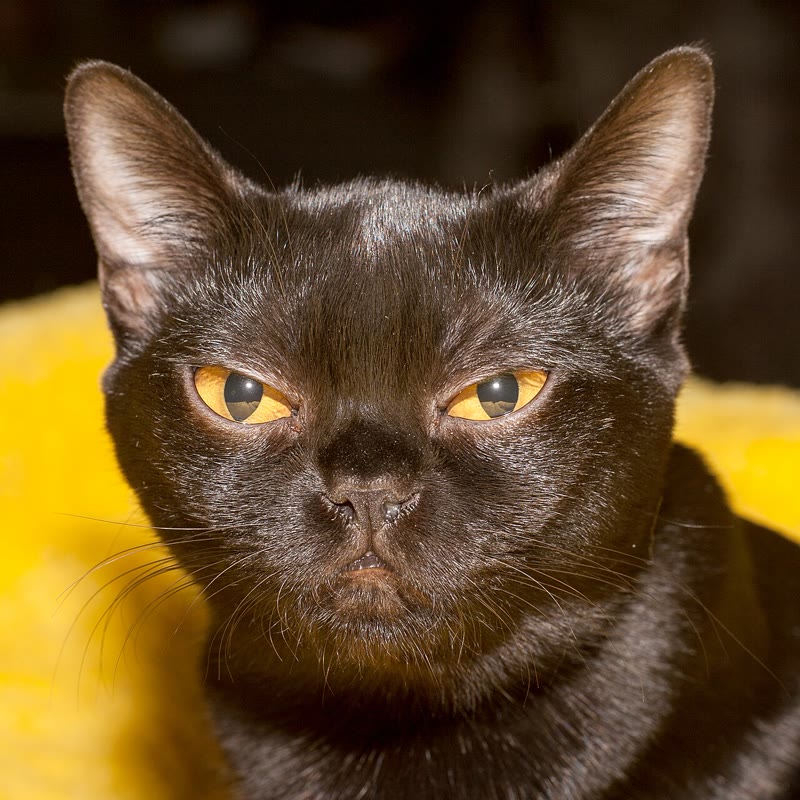
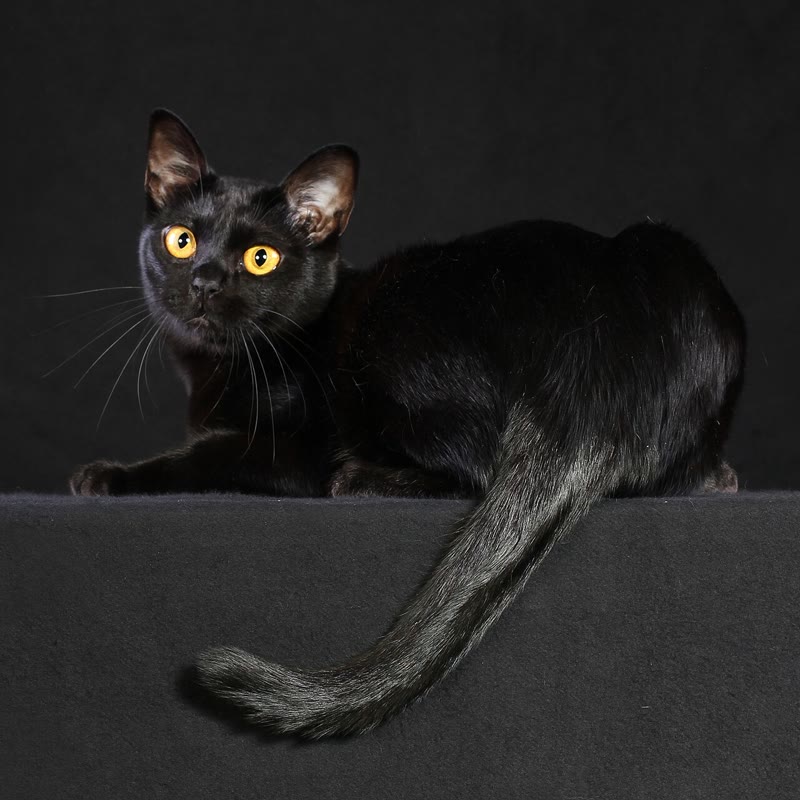
- Coat: short, fine and very glossy, often described as “patent leather”. It lies close to the body and is black right down to the roots.
- Eyes: large, round and copper to gold. The CFA describes them as brilliant “copper-penny” eyes.
- Black all over: even the nose leather and paw pads are black.
- Head: rounded, with a short muzzle and medium, slightly rounded ears.
- Body: medium-sized but solid and muscular. Bombays feel surprisingly heavy when you pick them up.
- Walk: many owners describe a panther-like sway when they walk.
Bombay cat vs black cat: how to tell the difference
Most black cats aren’t Bombays. Black is a colour, not a breed, and black cats come in almost every breed and in mixed-breed cats. A Bombay is a specific pedigree breed with registration papers.
| Feature | Bombay | Typical black domestic cat |
|---|---|---|
| Coat | Very short, fine, close-lying and glossy | Can be any length or texture |
| Eye colour | Copper to gold | Often green, yellow or hazel |
| Head shape | Rounded, with a shorter muzzle | Varies |
| Body | Compact and heavy for its size | Varies |
| Papers | Registered with a breed registry | None |
A cat can look very Bombay-like without being one. The only way to know for sure is pedigree papers from a registered breeder. If you’ve adopted a sleek black cat with golden eyes, enjoy it: it’ll be just as lovely, whatever its ancestry! Our own black cat, Spike, was one of the family. See our black cat names for ideas.
Bombay cat personality
- Affectionate and people-focused. The CFA describes Bombays as a balance between the easy-going American Shorthair and the outgoing, people-loving Burmese. Many follow their owners from room to room.
- Playful. They love chase toys and wand toys, and many learn to play fetch.
- Chatty but not loud. PetMD notes that they like to “tell you all about their day”.
- Lap cats. Many Bombays love to snuggle, especially in a warm spot.
- Sociable. They usually get on well with children, visitors and even dogs, if introduced well. See cats and dogs.
- Need company. Bombays don’t like being left alone all day. They suit homes where someone is around a lot, or homes with another cat.
Bombay cat health
PetMD describes the Bombay as a healthy breed with no well-documented breed-specific genetic diseases, but points out two things to watch:
- Weight gain. Bombays love their food, and a few extra ounces matter on a small cat. Measure meals and play every day. See helping your cat lose weight.
- Dental problems. Gum disease (gingivitis and periodontal disease) is common in cats. Brush your cat’s teeth if you can, and have them checked at every vet visit. See cat dental care.
Because Bombays come from Burmese lines, ask any breeder about the health of the parents, including heart checks, and what screening they do. Keep up with yearly vet check-ups and see our guide to common cat health problems.
Caring for a Bombay cat
- Grooming: the short coat needs little more than a weekly brush or a rub with a grooming mitt. This keeps the shine and removes loose hair. See our cat grooming guide.
- Food: a complete and balanced, high-quality food, with meals measured to keep your Bombay lean. See choosing the best cat food.
- Play: at least two short play sessions a day. Bombays are clever and enjoy puzzle feeders and fetch. See the best cat toys.
- Climbing: give them cat trees and shelves to climb.
- Company: if you’re out a lot, consider two cats.
- Indoors or out: many breeders ask that Bombays are kept indoors or given a safe, enclosed outdoor space. See should an indoor cat go outside?
Bombay kittens: price and finding a breeder
PetMD says Bombay kittens usually cost around $1,500 to $2,000, and that the breed is rare, with only a handful of breeders in the US and waiting lists of six to twelve months being common. Prices vary by country and breeder.
When choosing a breeder:
- Check they’re registered with a recognised cat registry, such as the CFA or TICA.
- Meet the kittens and their mum in the home where they were raised.
- Ask about health checks for the parents, vaccinations and microchipping.
- Expect kittens to go home at around 12 weeks or older, after their vaccinations, as is usual for pedigree kittens.
- Get a contract and registration papers.
- Avoid sellers with lots of litters, kittens available immediately, or who won’t let you visit.
Prefer to adopt? Black cats are often overlooked in shelters, and many have the same sleek looks and loving personality. See our guide to adopting a cat, and our kitten care guide once your new cat is home.
FAQs
Is my black cat a Bombay?
Probably not, as Bombays are a rare pedigree breed. A very glossy, short black coat and copper or gold eyes are Bombay traits, but only registration papers can confirm it.
Are Bombay cats cuddly?
Yes. Bombays are known for being affectionate, people-focused cats. Many love sitting on laps and following their owners around the house.
How much does a Bombay cat cost?
Bombay kittens from a breeder usually cost around $1,500 to $2,000 in the US, according to PetMD. Prices vary by country and breeder.
How long do Bombay cats live?
Typically about 9 to 15 years, and some live to 20, according to PetMD.
Are Bombay cats hypoallergenic?
No cat is truly hypoallergenic. Bombays shed less than many long-haired cats, but they still produce the allergen that affects people. See hypoallergenic cats.
Do Bombay cats get along with other pets?
Usually, yes. Their sociable nature means they often get on well with other cats and cat-friendly dogs, especially with slow introductions.
Sources
- Cat Fanciers’ Association: Bombay
- PetMD: Bombay cat breed health and care
Photo credits
- Header: “Cat sleeping on a chair” by DarthVaderRafa, CC BY-SA 4.0, via Wikimedia Commons, resized.
- “BOM Paragon of Beauty Bagilis” by Nickolas Titkov, CC BY-SA 2.0, via Wikimedia Commons, resized.
- “EbonyCatz Joyous Jasmine” by BeataBroing, CC BY-SA 4.0, via Wikimedia Commons, resized.